first time guide
Visiting a church can be intimidating. Knowing what to expect will help you focus on what matters most: meeting God in worship
The guide below answers common questions. Anything else? Just ask.

The guide below answers common questions. Anything else? Just ask.
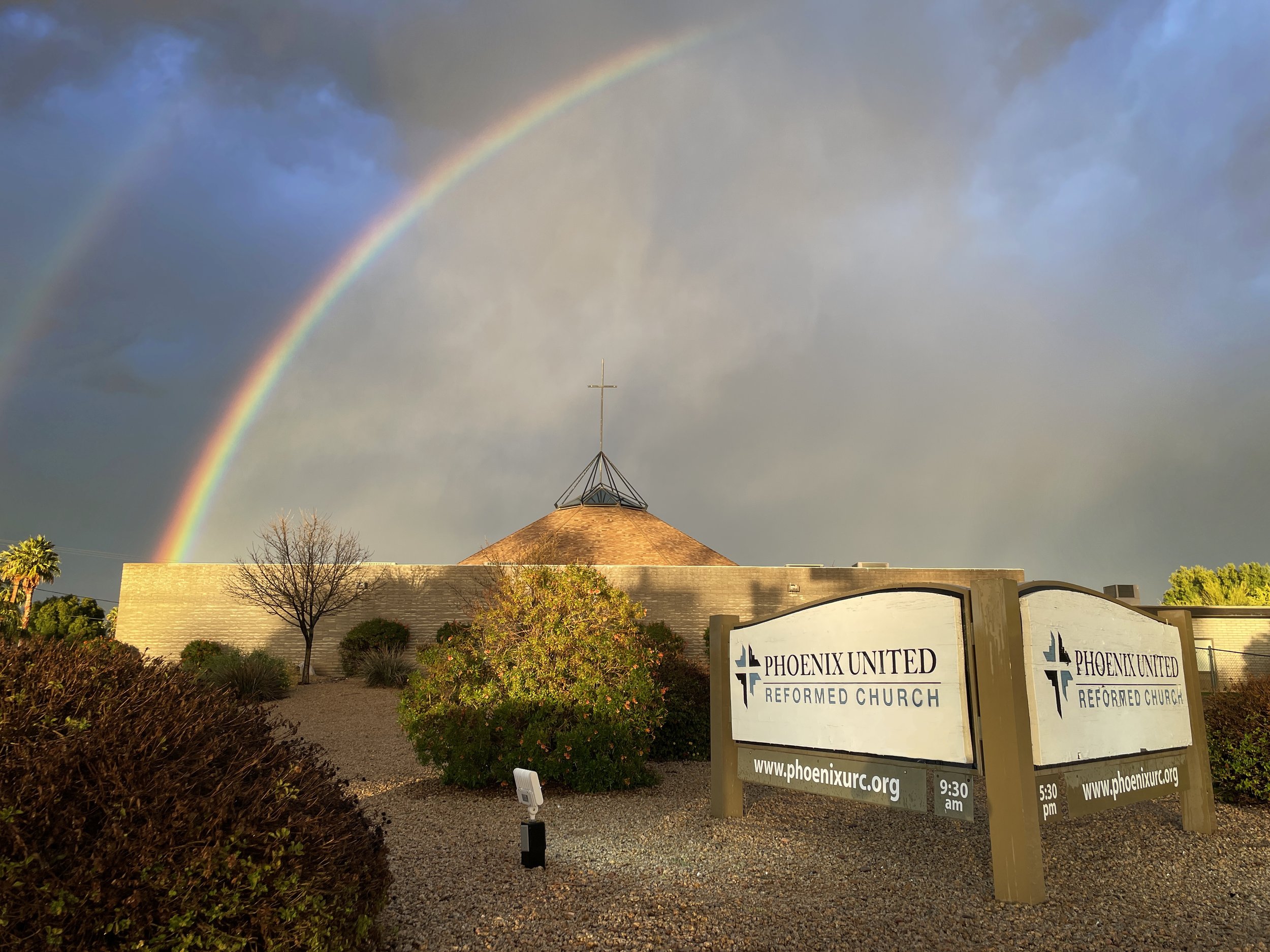
We're located centrally in the Biltmore area, on the corner of Missouri Ave. and 20th St., just north of Camelback and 51.
Jesus said “love your neighbors as you love yourself.” That calling extends to all kinds of people, including those with physical, cognitive, and other differences that might require additional compassion and assistance.
We can provide modern assisted listening devices for use during services.
Our sermons are live-streamed to YouTube and include closed captioning.
We have ADA-compliant bathrooms.
Our aisles and entry ways can accommodate wheelchairs and walkers.
Please let us know if there are other ways we can assist you to worship.
Our advice is “be forgettably presentable.” We want the Lord be the center of attention at worship, rather than our wealth, bodies, or personal interests (Jas 2:2-4; 1 Tim 2:8-10).
We try to respect everyone by starting and finishing on schedule. So we advise coming ten or fifteen minutes early to get oriented, use the bathroom, and find the nursery if needed. If you arrive late, that’s okay. An usher will help you find a seat.
Typically between 60-75 minutes. Sermons are around 35 minutes.
We provide childcare up to age 3. Nursing mothers may use the church library and fellowship hall (the service is live streamed on TVs). Otherwise, we welcome children to join for worship. This reflects our view of God’s family-inclusive way of forming his people. Don’t worry, we won’t be annoyed if your kids make some noise; we’ve all been there. Persistent criers can be taken to the foyer to calm down. Having whole families and multiple generations worship together is a big part of discipleship. Our pastors make a point to address people of all ages, including kids and teens.
There are no assigned seats. An usher will be on hand to help if needed. If your party is large, we suggest arriving 15 minutes early to ensure you can sit comfortably together.

Each of the elements that make up the service is drawn from biblical examples and commands, and modeled after how faithful Christians from all nations have worshiped throughout the ages. If you were to compare our services to one from the 2nd century in Jerusalem, or 16th century Geneva, you would find they are almost identical in form. We view this not merely as “traditional” worship, but as participating in an enduring, powerful, and above all biblical way of honoring and experiencing God.
Like every part of the service, our music exists chiefly for God’s pleasure and glory. We incorporate the 150 biblical psalms as well as traditional and recent hymns. We believe music should unite God’s diverse people in a way that reflects heavenly worship. So rather than cater to various trends or demographics, we prioritize vibrant congregational singing with minimal accompaniment. You can listen to several recordings of our songs here. Here’s one example from a typical Sunday:
The aim of every sermon at Phoenix URC is to connect the hope of Christ and the power of the Holy Spirit to how God now calls believers to live by faith. Rev. Spotts aims to be clear, concise, and biblically grounded in his teaching, as well as realistic, specific, and insightful in his applications. We bring in guest pastors and interns frequently so that we can benefit from a variety of perspectives, styles, and applications.
The morning service usually features an expository series through various books of the Bible. The evening “catechetical” service usually addresses one of the core teachings of the Christian faith and life, as summarized in the Heidelberg Catechism, and explained from Scripture.
Visitors are under no obligation or expectation to give financially. Our pastors and elders have zero access to individual financial records, nor is giving something they address often. But in accordance with Scripture, our deacons collect voluntary offerings which go to local and international ministries, foreign missions, and benevolent needs in the community (Ezra 2:68; 2 Cor 6:7). Around half of our annual giving is directed outside of our congregation. We’re a financially accountable and transparent organization.
Served freely after AM services on the side patio or in the fellowship hall. This is a good time to meet people or receive prayer from elders or deacons.
We offer a variety of classes for adults and children (K-12). We break for summer and holidays.
Families often take turns hosting a meal for visitors. It's a great way to get to know others and enjoy some good food. Ask a Greeter for details.

Reformed churches are above all Christian churches, rooted in the most ancient and biblical expressions of faith. We also identify with certain beliefs and concerns that characterized the historic Protestant reformation of the church. For instance, we confess that God grants salvation to sinners as a gift of grace, only through faith in Jesus Christ, and not as the result or reward of our good works. Yet we maintain that believers will necessarily show love and do good works, as living evidence of the indwelling Holy Spirit.
Our goal is to be “always returning” (semper reformanda) to God’s inspired Word as the supreme standard and source of spiritual life and renewal. We don’t claim to be the only true Christians. In fact, we rejoice that we have a lot in common with theologically conservative Presbyterians, Lutherans, Anglicans, as well as many Baptist and broadly Evangelical Christians. The “communion of the saints” is a lot bigger than our Reformed wing—but it’s a happy, healthy wing, and we’re happy to share it!
Biblical Authority (2 Tim 3:16)
God's sovereign grace in salvation (Isa 40:1-31)
Justified by faith in Christ alone (Rom 3:24)
All must repent and serve to the glory of God (1 Cor 10:31)
Covenantal Structure (Eph 6:1-4; 1 Cor 7)
Mutual Accountability & Plurality of Elders (1 Cor 5, Mt 18)
Historic consciousness (Psa 78:1-72)
Missional orientation (John 20:21)
Basically, that God graciously promises to forgive and grant eternal life to everyone who turns from unbelief to faith in the Lord Jesus Christ. But let’s break this down.
By "God," we mean there is a personal Being who dwells beyond time and space, yet is present in all times and places, because he is the creator and sustainer of everything good, true, and beautiful. He created human beings for the exalted purpose of knowing and enjoying him, and reflecting his divine nature in the world through their attitudes and actions.
Every person, however, has fallen short of God's will. We are all guilty for having scorned his many gifts and lived far below the moral standard he rightly requires of his creations. For that reason, no one deserves either life or blessing. Rather, we live under the shadow of eventual judgment and condemnation, like the fallen angels.
The good news is that God has not only made a way of salvation possible for human beings, but himself ensures that a multitude of people “whom no man can number,” will not only be forgiven but raised to the highest position of joy and blessing in the age to come! All of this is being accomplished through his Son, Jesus Christ, whom he sent into the world as the Redeemer.
The promise of the Gospel is that every sinner who turns from unbelief and places his faith in the Lord Jesus Christ will receive eternal life. This salvation comes to us purely according to grace, which the Father purposed in Jesus Christ before the ages began. He bestows all his gifts freely on those who look away from their good works, that is, their own self-righteous attempts to deserve his favor, and instead embrace Jesus Christ to be their all-sufficient Savior. Their simple prayer is, “Lord, have mercy on me, a sinner, for Jesus’ sake.”
Through faith, the Spirit unites you with Jesus. That very moment, God counts to your name the lifelong obedience of his Son, reckoning it your own. Believers are thus “justified,” meaning God declares them righteous in his sight, not because of any goodness in or from ourselves, but only on account of Christ’s righteousness. Moreover, the Father regards now us as having satisfied the penalty for sin, because Jesus’ suffered and died in our place on the cross. He is the “Lamb of God who takes away the sin of the world,” as John the Baptist preached.
Finally, Jesus’ resurrection provides assurance that he is victorious over guilt and the grave. From his place at God’s right hand in heaven, the Lord now sends forth his Holy Spirit to convert, sanctify, and equip his people for ministry, until the day when we are all gathered to him.
When Christ returns bodily, as he promised, he will raise all people from the dead. There will be a judgment of everlasting consequence. Those who know him will be vindicated for Christ’s sake, and rewarded graciously for the good which God worked in and through them. But those whom Jesus does not know as his own will receive their just sentence of final separation from God and all his blessings. If anyone thinks this is “too much” and unfair, it only shows how unfairly they despise God’s infinite holiness and honor.
The way of peace is not far off. Anyone who desires to be saved needs only to cast themselves on God’s mercy, and he will grant it. And by his help, they will begin to show forth new spiritual life. The good news is held out to you, too! So why don’t you believe on Christ and begin to serve him in gratitude?
Yes! We know many churches segregate minors. The Bible, however, presents a different dynamic: all-ages uniting to sing, pray, and receive God's Word of grace (Deuteronomy 31:12, Ezra 10:1; Nehemiah 8:2). We have found age-inclusiveness to be a great blessing to us. We hope you do too!
Many of us were not raised with this practice but were led to it through a careful study of Scripture, especially God’s way of administering his covenants throughout redemptive history. In short, we do not baptize children on the presumption of their regeneration, nor do we think that the sacrament of baptism regenerates, saves, or gaurantees the salvation of its recipients, any more than circumcision formerly saved the descendants of Abraham. But like that former sign, which was given to both Abraham and his children, baptism is a visible sign and physical seal of God’s general promise to the church, to save and sanctify all whom God calls in grace through faith in Jesus Christ. We regard our children as members of the visible church while knowing that God alone sees the heart, and we call them all their lives to “make their calling and election sure,” by professing faith and living in a way that evidences a new heart. Where this doesn’t occur, we call them to repentance and faith.
For further explanation, you can watch this video sermon.
God created His people for fellowship (Acts 2:42-48; 4:32-35; Ephesians 2:19-22). Connecting throughout the week is an integral component of Phoenix URC's ministry. Sundays are the best place to begin since relationships are formed and deepened before, during, and after worship. Post-worship classes also provide an opportunity for relationship-building as well as informal contacts throughout the week. Check out the "Get Involved" section of our website.
Giving is an important component of Christian living. Giving comes in the form of spiritual gifts (1 Corinthians 12:4-6; Ephesians 4:7) and material offerings (Malachi 3:10; 2 Corinthians 9:6-8). Opportunities abound at PURC for both. As to monetary offerings, PURC supports a number of carefully designated causes including such things as local benevolence and budgetary needs, home and foreign missions, Christian education, disaster relief, and other causes. PURC's deacons as managers of spiritual and material resources (Acts 6:1-6; 1 Timothy 3:8-13) ensure that all monies given are accounted for and distributed properly.
The purpose of these historic summaries of Christian beliefs is to systematically teach (Luke 1:1-3; 1 Timothy 4:16), protect (2 Peter 3:17), and defend (Jude 3) the faith. They do not possess the same inspired authority as the Bible (2 Timothy 3:16; 2 Peter 2:19-21), yet they are useful as faithful summaries of what the Bible teaches and help in discipling new believers (Matthew 28:19,20).
Church membership is an important component of Christian discipleship. Jesus said, "Whoever would come after Me, let him deny himself, take up his cross, and follow Me." (Matthew 16:24). The Bible teaches us that to follow Christ requires that we join ourselves to His church (Hebrews 10:22-25; Acts 2:47). Membership is the means whereby we formally commit ourselves to the local expression of Christ's church much like formal vows commit husbands and wives to each other. Church membership brings with it the fruits of joy, fellowship, service, pastoral oversight, and accountability in the local church. Church membership has been a great blessing to us. If you want to know the process for becoming a member at PURC, see any Elder, Rev. Spotts, or contact us.
Find a True Church
Christian Education Opportunities
Transfer Membership
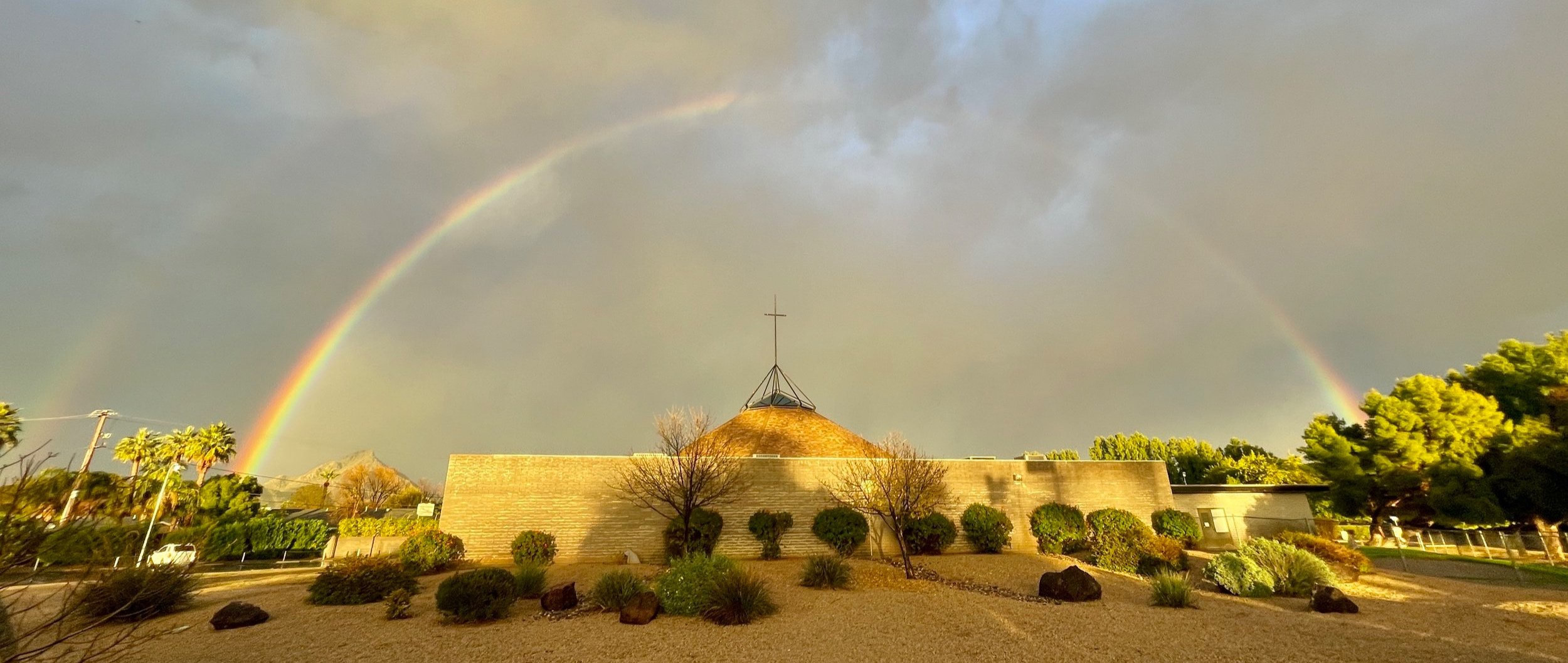
A beautiful start to a new year. January 1, 2023. Praise God for keeping his promises!